 |
|
| Tracy L. Tienken,
MS5 |
| President |
| Karen Storey, DTM |
| Vice President Education |
| Gabe Young, TC3 |
| Vice President Membership |
| Patricia Pines, LD3 |
| Vice President of Public Relations |
| Noor Hassan, PM2 |
| Secretary |
| Gabe Young, TC3 |
| Treasurer |
| Jay Mathur, PM4 |
| Sergeant at Arms |
|
|
|
|
|
|
 |
|
 |
|
|
 |
|
Find the Hidden Name |
|
|
|
|
|
|
Dear Club Members,
Growth is often
something seen in others yet
infinitely harder to find within ourselves.
For me just admitting
that is growth itself; in a nutshell.
The best place to
spot growth is actually to become an
evaluator. Start with what the person does
well, what they have naturally grown into.
Here is a trick to try. As a new or
experienced evaluator when looking to
challenge someone or recommend improvements
tell them to keep doing more of what you
just said they do well to lean into their
talent.
Please water me
with love and kindness and I will try to do
the same for you then we will all bloom.
That's it from your
President as I need time to grow and bloom.
TRACY
Tracy L. Tienken
Club President
|
| |
|
Follow Gaveliers on |
 |
| |
QUOTES ABOUT GROWTH
“Change is inevitable. Growth is optional.”
— John C. Maxwell
“We cannot become what we need to be by remaining what we are.”
— Max DePree
“Strength and growth come only through continuous effort and struggle.”
— Napoleon Hill
“Growth itself contains the germ of happiness.”
— Pearl S. Buck
“Be not afraid of growing slowly; be afraid only of standing still.”
— Chinese Proverb
“Growth is never by mere chance; it is the result of forces working together.”
— James Cash Penney
“Hardships often prepare ordinary people for extraordinary destiny.”
— C. S. Lewis
“Your life does not get better by chance; it gets better by change.”
— Jim Rohn
“It is never too late to be what you
might have been.”
— George Eliot
“If you really want to grow,
read Mitch Albom's Tuesdays with Morrie will do, but make sure to follo
it up with Finding Chika.”
— Tracy L. Tienken
|
|
|
|
 |
|
Scroll to bottom to view answers. |
|
|
|
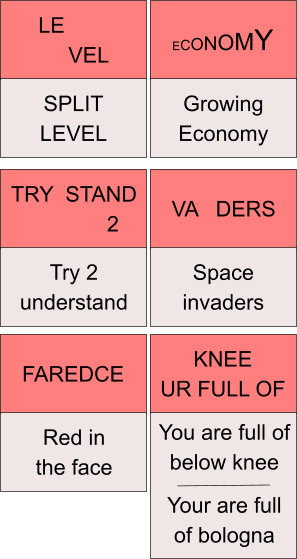
A REBUS is
a picture representation of a name, work, or phrase.
Each "rebus" puzzle box below portrays a common word
or phrase. Can you guess what it is? |
 |
|
Answer:
Since the word HEAD is
over the word HEELS,
the answer to the puzzle would be HEAD
OVER HEELS! |
|
|
|
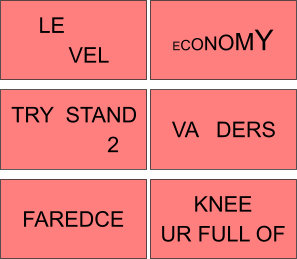
Can you get these? |
|
|
 |
|
|
 |
| |
| In October of 2025,
Toastmasters International enhanced Pathways. |
| |
| Basically, they added
eighteen meeting roles. They also added |
| the requirements to present |
| a module from the
Better Speaker |
| Series, the
Leadership Excellence |
| Series and the
Successful Club Series. |
| |
| See my new Pathways website
here: |
|
https://my-pathways.info/index.htm |
or view my set of
Pathways Pointers. |
| |
|
-------------------------------------------- |
|
|
|
|
 |
|
|
|
click title to view details |
|
|
How Club Meeting Roles
Build
Real-World Skills
This guide outlines each club meeting role
and shows how participating can build valuable
real-world skills. |
|
|
Meeting Roles and
Responsibilities
Does your club involve everyone at every
meeting? Includes an outline and a PowerPoint
presentation. |
|
|
|
Toastmaster of the Day (TMOD) |
The Toastmaster is a meeting
director and
host. |
|
|
Topicsmaster (TM)
Taking on this
role improves
organizational skills, time
management and facilitation skills. |
|
|
General Evaluator (GE)
The
General Evaluator evaluates everything that takes
place during the club meeting. |
|
|
Meeting Speaker (SP)
Every speaker is a role model
and club
members learn from
one another's speeches. |
|
|
Evaluator (EV)
Evaluators provide verbal and written
feedback to meeting speakers. |
|
|
Grammarian (GR)
The Grammarian helps club members improve
their grammar and vocabulary. |
|
|
Ah-Counter (AH)
The purpose of the Ah-Counter is to note
any overused words or filler sounds. |
|
|
Timer (TI)
Taking on this role improves
time
management.
(Tool Kit) |
|
|
A Toastmaster Wears Many
Hats
An
essential booklet for fulfilling
club meeting
roles. |
|
|
|
|
|
- |
|
-------------------------------------------- |
| |
| NEWSLETTER EDITOR |
| Click Graphic |
 |
| |
|
Patricia Pines |
| |
|
JACK OF ALL TRADES |
| Click Graphic |
 |
| Karen Storey, DTM |
| |
| WEBMASTER |
| Click Graphic |
 |
Frank Storey, DTM
_____________________________ |
| |
 |
| |
|
|
|
|
| - |
|
 |
| (noun) |
|
|
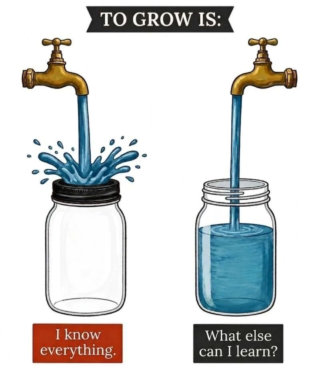
Growth is the positive development that occurs when consistent effort transforms potential into achievement.
For Toastmasters:
Growth is the ongoing
development of our
communication, leadership,
confidence, and character. It
occurs when we challenge
ourselves, learn from
experience, and continue moving
forward one speech, one meeting,
and one opportunity at a time.
Synonyms:
Development, Progress, Advancement, Improvement;
|
 |
|
|
 |
|
|
 |
The Power of Growth
Growth is not a single accomplishment.
It is the continuous process of becoming better through
learning, experience, practice, and consistent effort.
In Toastmasters, growth happens every time we step beyond
what is comfortable. We grow when we prepare a speech,
accept a meeting role, listen carefully to an evaluation,
try a new technique, or stand up and try again after a
speech that did not go exactly as planned.
Growth does not require perfection. It
requires progress. The first speech may be difficult.
The second may be a little easier. With practice, things
that once seemed intimidating can become familiar.
Confidence grows because experience grows.
That is why growth is such a natural theme for our club.
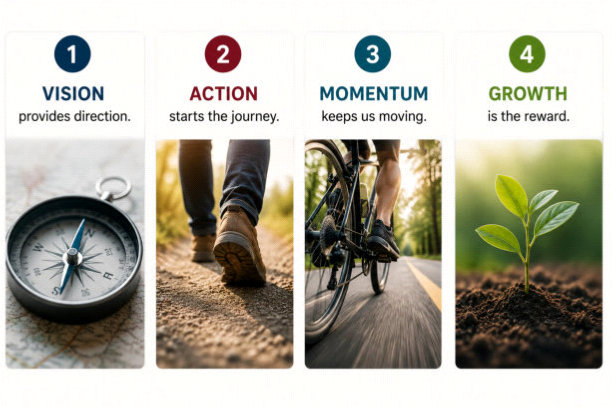
Our recent journey has followed a simple progression:
-
Vision gave us a direction.
-
Action turned ideas into something real.
-
Momentum helped us keep moving.
-
Growth is what happens when we continue.
Think about your own Toastmasters journey. Perhaps your
first challenge was simply introducing yourself. Then came
your Ice Breaker. Later, you accepted a meeting role, gave
an evaluation, completed another Pathways project, or took
on a leadership responsibility. Each step built on the one
before it.
Small steps create big changes. A single
speech may not seem like a major accomplishment. One
meeting role may seem routine. One helpful evaluation may
take only a few minutes. But repeated over time, these small
actions change us—and they strengthen our club.
 |
A Challenge for This Month |
|
Here is a simple way to turn the idea of growth into action.
Choose at least one of these challenges to
complete this month—or, better yet, choose several:
-
Deliver a speech you've been postponing.
-
Volunteer for a meeting role you've never held.
-
Mentor a new Toastmaster.
-
Complete your next Pathways project.
-
Invite a guest to experience our club.
-
Give an evaluation that inspires another member to grow.
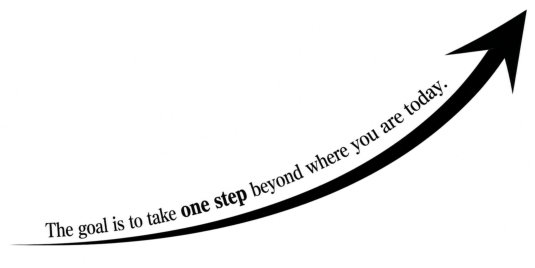
The goal isn't to do something extraordinary.
|
|
|
 |
|
Small steps today
become great
accomplishments tomorrow.
|
 |
|
|
|
Growth is also something we can help create for others.
A welcoming smile can encourage a guest. A thoughtful
evaluation can give a member the confidence to try again.
A willingness to mentor can help a new Toastmaster discover
what is possible.
|
|
So as we continue moving forward, don't ask,
“Am I finished?” Ask instead,
“What is my next step?”
There is always another skill to practice, another role
to try, another project to complete, another person to
encourage, and another opportunity to grow.
|
|
|
|
Growth is the reward for consistently moving forward.
|
|
|
|
|
|
|
|
 |
GROWTH
We use the word
growth
all the time—to describe plants, businesses,
knowledge, skills, confidence, and even ourselves.
But where did the word come from?
Growth
comes from the Old English verb
grōwan, meaning
“to grow, flourish, increase, or
develop.”
Originally,
grow was strongly
associated with the natural world—the way plants
spring from the earth, become larger, and mature.
Over the centuries,
its meaning expanded.
We began to speak not
only of plants growing,
but of people growing in
knowledge,
communities growing in size,
businesses growing in success,
and individuals growing in
ability and confidence.
That makes
growth an especially
fitting word for Toastmasters.
A Toastmaster may not
notice dramatic change after a single speech or
evaluation. But speech by speech, meeting by
meeting, something happens.
Confidence
grows.
Skills grow.
Leadership grows.
And we grow.
The word may have
ancient roots, but its meaning is just as relevant
today:
To grow is
to become more than you were before.
And isn't that
exactly what Toastmasters is all about?
|
|
|
|
|
 |
|
|
|
|
|
HIDDEN NAME CONTEST |
|
|
|
And the winners from September were: |
|
Stephanie Steckel
and Tracy T. |
|
|
|
|
|
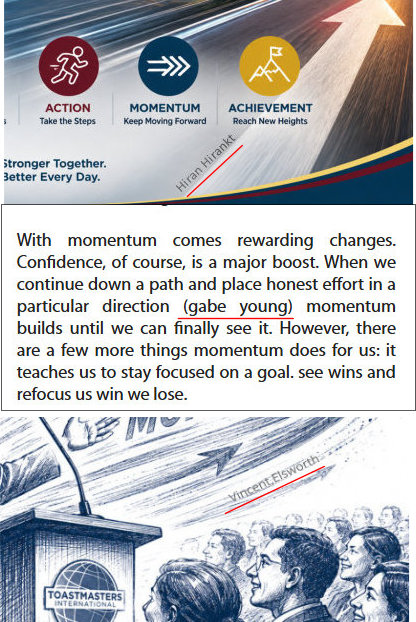
Where were the names hidden? |
|
|
 |
|
|
|
This contest is suspended due to lack of
participation. |
|
|
|
|
|
|
|
A NEW FEATURE |
|
|

|
|
Exploring the Words, Meanings, and Quirks of the English Language
|
|
English is full of words that sound alike, look alike,
or seem to mean the same thing—but don't!
Understanding these differences can make us more confident
speakers, writers, and communicators.
This month, let's look at three terms we often hear
but may not always remember:
synonyms, antonyms, and homonyms.
Click the graphic, or go
HERE!
|
|
|
|
|
|
|
 |
|
|
|
WHY JOIN THE ARTS
COMMITTEE?
|
 |
|
|
|
|
|
A.R.T.S. — Always Ready to Speak
is a club committee that encourages members to be
prepared when an opportunity opens up. That might
mean giving a speech when a scheduled speaker
cancels, filling in for an unassigned meeting role,
or stepping in when a fellow Toastmaster cannot
attend. For the club, members who are willing to
help keep meetings running smoothly and give
everyone a full learning experience.
Members should know about
A.R.T.S. because an unexpected opening can be a
chance to complete a Pathways project, practice a
meeting role, or build confidence. Being “always
ready” does not mean being perfect. It means having
an idea for your next speech, knowing which roles
you could take, and being willing to say yes when
you can.
|
|
Want to join?
Click Here. |
|
|
|
Email Karen, out VPE, and ask her to add you to the
committee. |
|
|
|
Email Karen |
| |
|