|
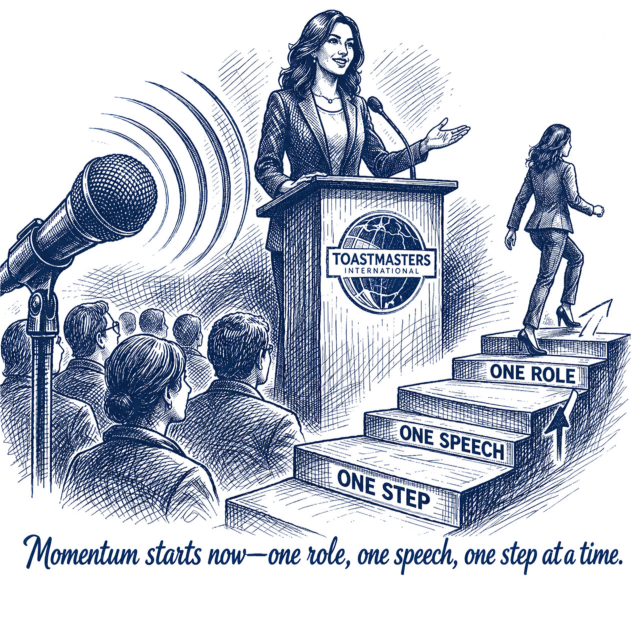
As we step into May, there’s a noticeable energy in the air—Momentum. Progress. Forward motion. In Toastmasters, this is the time of year when those small steps we’ve taken begin to add up to something meaningful.
We now have just two months left in the Toastmasters program year. Two months to complete goals. Two months to finish strong—both as individuals and as a club. Progress Is Built One Step at a TimeMomentum doesn’t come from one big action—it comes from consistent, intentional effort:
Each meeting is an opportunity to move forward. Even one role or one speech can reignite your progress and build momentum quickly. Check Your Goals—Then Take ActionNow is the perfect time to pause and ask:
If you’ve stalled, you’re not alone—and it’s not too late. Momentum can start again with a single step. Club Success Is a Team EffortOur club’s success depends on each of us. When members complete speeches, take roles, and support meetings, we move closer to achieving Distinguished Club Program goals. Every speech delivered, every role filled, and every new member supported contributes to our shared progress. Let’s Finish StrongMay and June are not for slowing down—they’re for accelerating. This is our moment to:
Momentum builds quickly when we all lean in together.
Let’s make these final two months count. Let’s build momentum—and carry it across the finish line.
|
|||||||||||||||||||||||||||||||||||||||||||||||||||||||||||||||||||||||||||||||||
 |
||||||||||||||||||||||||||||||||||||||||||||||||||||||||||||||||||||||||||||||||||
|
||||||||||||||||||||||||||||||||||||||||||||||||||||||||||||||||||||||||||||||||||
| HOW TO SAVE MEETING ROLES | ||||||||||||||||||||||||||||||||||||||||||||||||||||||||||||||||||||||||||||||||||
| Stephanie Steckel | ||||||||||||||||||||||||||||||||||||||||||||||||||||||||||||||||||||||||||||||||||
 |
||||||||||||||||||||||||||||||||||||||||||||||||||||||||||||||||||||||||||||||||||
|
As you progress through your path,
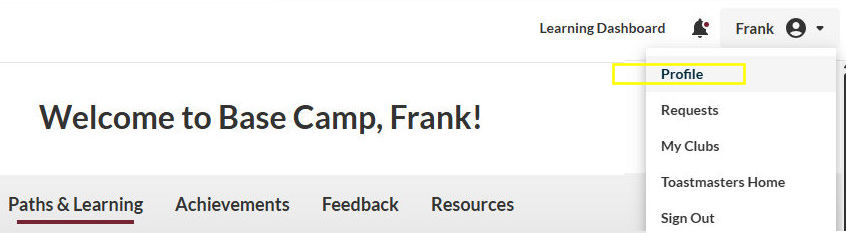
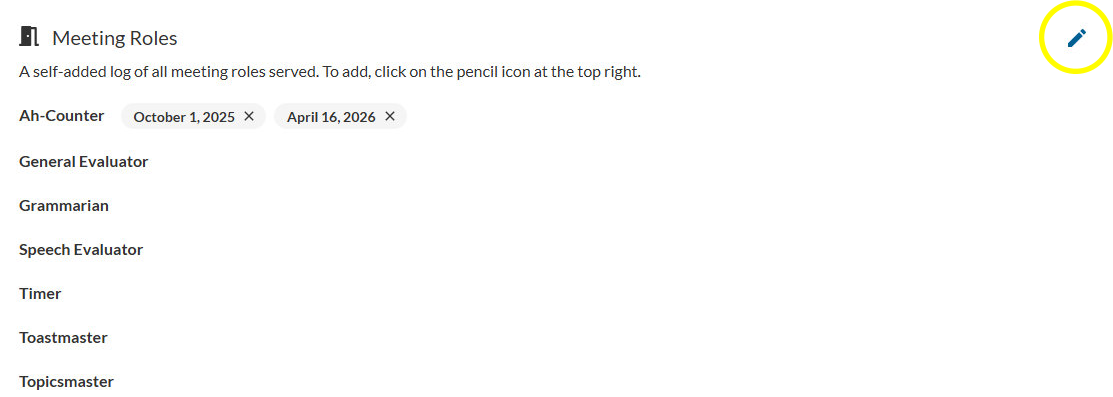
you can get credit for serving in meeting roles. Meeting roles give us Momentum to keep learning! In every level, there are meeting roles for which you may take credit. To save them is quite simple: Simply: 1. Go to Basecamp 2. Pick Profile 3. Scroll down to Meeting roles, enter Just remember: Basecamp/Profile: Meeting roles | ||||||||||||||||||||||||||||||||||||||||||||||||||||||||||||||||||||||||||||||||||
| Visually, the procedure looks like this: | ||||||||||||||||||||||||||||||||||||||||||||||||||||||||||||||||||||||||||||||||||
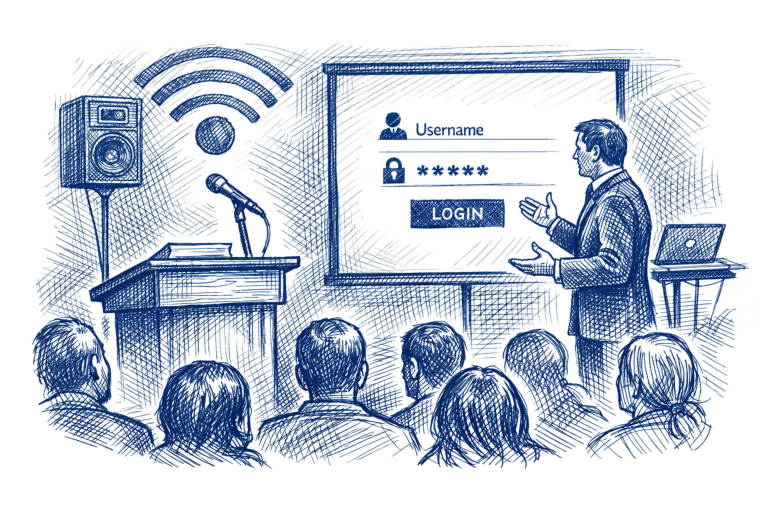
| 1. Login: toastmasters.org | ||||||||||||||||||||||||||||||||||||||||||||||||||||||||||||||||||||||||||||||||||
| 2. Click on the the Go to Base Camp tile | ||||||||||||||||||||||||||||||||||||||||||||||||||||||||||||||||||||||||||||||||||
 |
||||||||||||||||||||||||||||||||||||||||||||||||||||||||||||||||||||||||||||||||||
| 3. Select Profile | ||||||||||||||||||||||||||||||||||||||||||||||||||||||||||||||||||||||||||||||||||
 |
||||||||||||||||||||||||||||||||||||||||||||||||||||||||||||||||||||||||||||||||||
| 4. Use the small digital pencil to select which Meeting Role you want to get credit for: | ||||||||||||||||||||||||||||||||||||||||||||||||||||||||||||||||||||||||||||||||||
 |
||||||||||||||||||||||||||||||||||||||||||||||||||||||||||||||||||||||||||||||||||
| View All Newsletters | ||||||||||||||||||||||||||||||||||||||||||||||||||||||||||||||||||||||||||||||||||
|
Newsletter Editors: Send comments, suggestions, or questions to: |
||||||||||||||||||||||||||||||||||||||||||||||||||||||||||||||||||||||||||||||||||
| Karen Storey, DTM : karen@Karenstorey.com | ||||||||||||||||||||||||||||||||||||||||||||||||||||||||||||||||||||||||||||||||||
| Frank Storey, DTM : fstorey1943@gmail.com | ||||||||||||||||||||||||||||||||||||||||||||||||||||||||||||||||||||||||||||||||||

.png)