|
|
| - | | 
| | (noun) | | Leadership is the ability to guide, influence, and support others as they work toward a shared goal. For Toastmasters: Leadership means putting communication skills into action to help others succeed. We practice it when we prepare for a meeting role, mentor a member, offer constructive feedback, organize an activity, or step forward when help is needed. Related words: guidance, influence, direction, and service. | 
| | 
| |
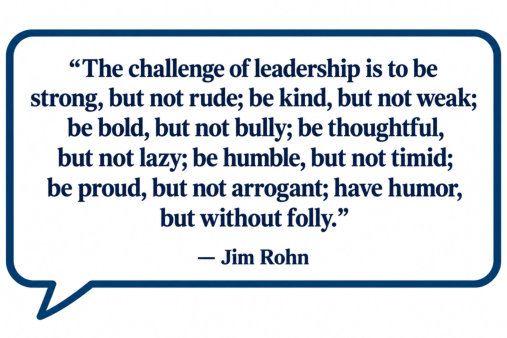
“All great leaders keep working on themselves
until they become effective.”
- Jim Rohn
|
| | |
| | Why this month's theme? | |
| |
Our newsletter has followed a natural
progression over the past several months. In July,
we focused on Vision—imagining
what our club could become and setting meaningful goals. In
August, we shifted to
Action, turning ideas into reality.
In September, we celebrated
Achievement, recognizing our
members' accomplish-ments and progress. In October,
we emphasized Growth,
understanding that every speech, meeting role, and challenge provides an
opportunity to learn and improve.
Now, in November,
our focus turns to Leadership—putting
our skills into practice to inspire and empower others. Leadership is
not defined by a title but by our actions, whether mentoring a new
member, taking initiative, or encouraging someone to embrace a new
challenge.
Together, Vision, Action, Achievement,
Growth, and Leadership reflect our club's
continuing journey toward excellence.
This November, let's remember that true leadership is
measured not only by what we accomplish, but by what we inspire others
to achieve.
| | 
| | LEADERSHIP We use the word leadership all the time—to describe guiding a team, organizing a project, serving a community, or helping others succeed. But where did the word come from? Leadership combines leader with the suffix -ship. Its roots reach back to the Old English verb
LAH-dahn, meaning to guide or conduct. A leader, then, is someone who guides others. The word leadership is recorded from 1821, when it referred to the position or command of a leader. That idea of guiding others gives the word special meaning for Toastmasters. We can guide through our words, our actions, and the example we set. We practice leadership when we organize a meeting, encourage a hesitant speaker, mentor a new member, or step forward when help is needed. Meeting by meeting, we learn to accept responsibility, listen carefully, and help others discover what they can accomplish. As our own confidence and skills grow, we become better prepared to support someone else's progress.
We prepare.
We encourage.
We guide.
And we help others grow.
The word has old roots, but it offers a useful reminder today: To lead is to help others move forward. And isn't that exactly what Toastmasters is all about? | |
| |
|
| | A NEW FEATURE
(page 2) | |
 | | Exploring the Words, Meanings, and Quirks of the English Language | | Words do more than convey information.t
They create pictures, suggest sounds, set a tone, and make ideas memorable. English offers plenty of ways to play with language, from blending two words into one to choosing a gentler expression for a difficult subject. In our featured article, we explore five fascinating language devices: portmanteaus, palindromes, onomatopoeia, alliteration, and euphemisms. For Toastmasters, these are more than interesting terms. They offer practical ways to bring stories to life, add rhythm to a speech, and choose words that connect with an audience.
Click the graphic, or go HERE! | | |
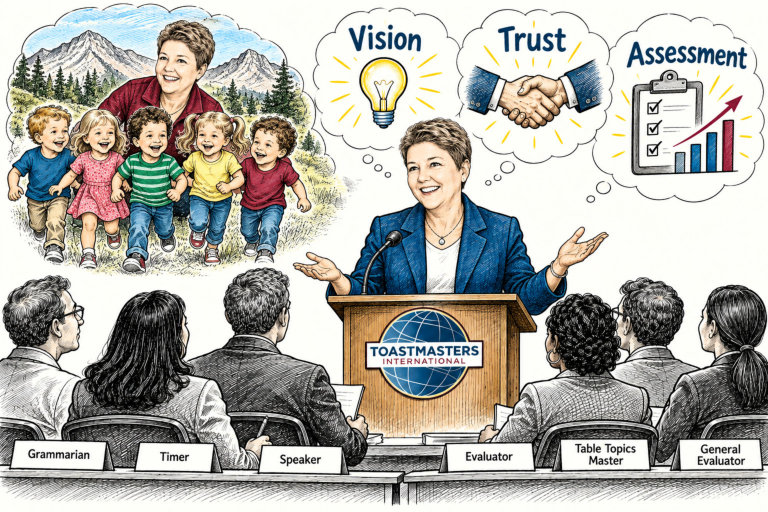
| What Makes a Good Leader? 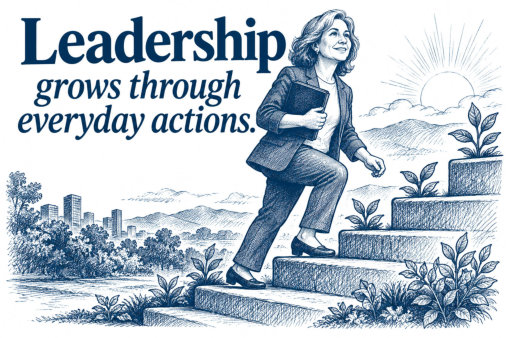 Think of someone you have enjoyed working with
a person who made you feel heard, encouraged you to try something new, and helped you do your best. What made that person a good leader? Chances are, you remember how they treated people more clearly than the title they held. In Toastmasters, we have many opportunities to develop those same qualities. We practice leadership when we conduct a meeting, mentor a member, give an evaluation, or step forward to fill an open role. Each opportunity helps us build habits that serve us in our clubs, workplaces, families, and communities. Here are six traits worth practicing. 1. A good leader listens. Listening means giving someone your attention and seeking to understand before responding. A leader asks questions, welcomes ideas, and makes room for quieter voices. At a club meeting, that might mean asking a new member about their goals and listening carefully enough to help them take the next step. 2. A good leader follows through. Trust grows when actions match words. Preparing for an assigned role, keeping a promise, and letting others know when plans change all demonstrate reliability. Small commitments matter because other people depend on them.
3. A good leader communicates clearly.
People need to understand the goal, what is expected, and how they can contribute. Clear communication also includes explaining the reasons behind a decision and inviting questions. Toastmasters gives us regular practice in organizing our thoughts and delivering them with purpose. 4. A good leader encourages growth. An effective leader notices effort and helps people see what they can accomplish. A thoughtful evaluation offers specific praise and a practical suggestion for improvement. Encouragement can give a hesitant member the confidence to deliver a first speech or accept an unfamiliar role. 5. A good leader accepts responsibility. Mistakes happen. Leaders acknowledge their part, make corrections, and learn from the experience. They also give others credit for their contributions. A simple “I could have handled that better” or “Thank you—you made this possible” can strengthen a team. 6. A good leader helps others lead. Leadership includes sharing opportunities. Inviting someone to organize an activity, lead a discussion, or mentor another member helps build confidence and spreads the work. Offer guidance, then give that person room to make decisions and develop their own approach. These traits take practice. We may listen well one day and rush to give advice the next. We may feel comfortable leading a familiar activity and uncertain when facing something new. Those moments give us something useful to work on. This November, choose one leadership habit to strengthen. Ask a question before offering an answer. Prepare early for your meeting role. Recognize someone’s contribution. Help a member take on a new challenge. You do not have to wait for an election or an officer title. Your next opportunity to lead may be as close as your next conversation. | | |
| | | 
| | |
| PROBLEM SOLVING
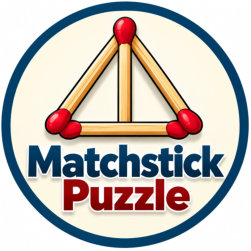 | | | Leaders need problem-solving skills because challenges rarely arrive with clear instructions or obvious answers. Like a matchstick puzzle, a situation may require us to look closely, question our assumptions, and try a different approach. Solving these puzzles gives us a chance to practice patience, flexible thinking, and the willingness to reconsider an idea—skills that help leaders guide a team through difficulties. Sometimes, moving just one matchstick changes everything; in leadership, one thoughtful adjustment can open the way to a solution. | | | Problem One: Move ONE matchstick to make a square. | 
| | | Problem Two: Move six matches to make five squares. | 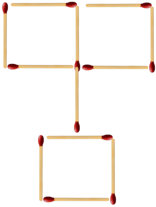
| | | Problem Three: Move two matches to make seven squares.
| | 
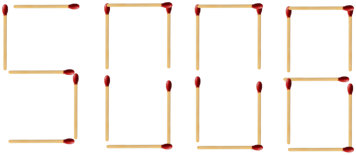
| | | Problem Four: Move only TWO matchsticks and create the largest number possible.
| | 
| | | For the answers, click here.
| | |
|
Leadership Lessons from SurvivorWhat Toastmasters Can LearnBy Stephanie Steckel 
What could surviving 26 days on a remote island, competing for a million dollars, and delivering your first Toastmasters speech possibly have in common? More than you might think! Survivor is one of my favorite television shows. Every episode offers lessons in leadership, teamwork, perseverance, and decision-making. The show's creator, Mark Burnett, is a former British paratrooper who understands the importance of taking risks sometimes big risks! 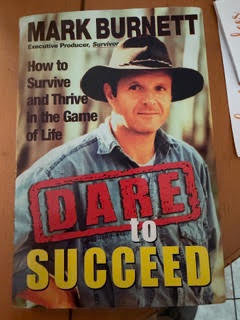
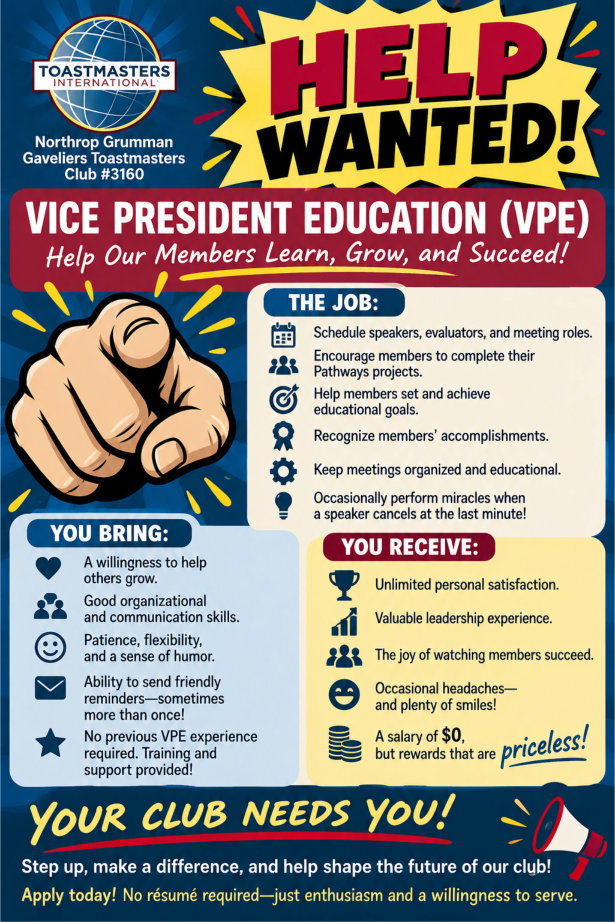
He created a competition that puts ordinary people in extraordinary circumstances, competing for a million-dollar prize. Winning requires more than physical strength. It demands perseverance, strategic thinking, relationship-building, and the ability to work with others. Three leadership principles stand out to me, and each connects directly to Toastmasters. 1. Perseverance Builds CharacterOn Survivor: Imagine living outdoors for 26 days on a beach without a comfortable bed, adequate shelter, or provided food. Add physically demanding challenges, unpredictable weather, and the constant possibility of being voted off the island. Contestants must push through exhaustion, disappointment, and uncertainty. Perseverance becomes essential to staying in the game. In Toastmasters: For me, persevering through my first speech and competing in my first speech contest were two of my biggest hurdles. After I overcame those challenges, I realized I could move forward and tackle even bigger ones. Every speech, evaluation, and new meeting role offers another opportunity to step outside our comfort zones. Perseverance builds confidence, and confidence encourages us to keep growing. 2. Set Achievable GoalsOn Survivor: Successful contestants often focus on smaller, achievable goals rather than concentrating exclusively on winning the million-dollar prize. Their immediate goal might be, “I want to make it to the merge,” or “I want to find the next immunity idol,” rather than focusing entirely on reaching the final three. Each small accomplishment brings them closer to their ultimate goal. In Toastmasters: Setting a goal of delivering one speech a month is both reasonable and achievable. Each completed speech, Pathways project, and meeting role moves us closer to becoming more confident communicators and effective leaders. We don't have to become accomplished speakers overnight. Small successes build confidence and encourage bigger challenges. 3. Choose Your Teammates WiselyOn Survivor: Strong alliances and camaraderie can make the difference between advancing in the game and being voted off. Players must build trust and work with others. No one wins alone. In Toastmasters: Working together to create enjoyable, productive meetings is rewarding. I value the feedback I receive on my speeches because it helps me improve and communicate more confidently, both in Toastmasters and beyond. Whether on a remote island or in a Toastmasters club, perseverance, achievable goals, and strong relationships help us grow as leaders. The real reward is what we learn and accomplish together. We need your help! Apply before the position is taken.
|