

|
Pathways Pointer – Number 62 – September 14, 2026 |
|
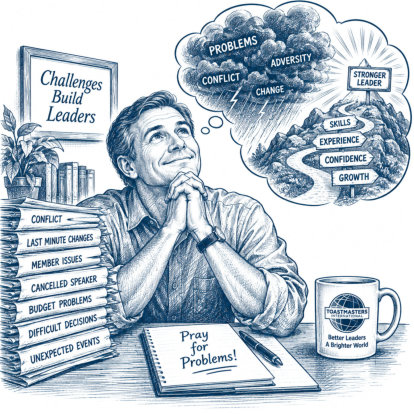
When I served as a District officer, I often told club leaders they should be thankful for problems—in fact, they should pray for problems. |
||||||||||||||
|
Why? Because leadership is not developed when everything goes according to plan. Some of our most valuable leadership skills are learned when we face adversity, solve problems, manage conflict, make difficult decisions, and deal with the unexpected. |
||||||||||||||
Helpful TipThe next time something goes wrong, before immediately jumping into solution mode, ask yourself: “What leadership skill is this problem giving me the opportunity to develop?”
After the problem is resolved, take five minutes to think about what happened, what worked, what you might do differently, and what you learned. That short reflection can turn an unpleasant experience into a valuable leadership lesson. |
||||||||||||||
What’s New?Try changing the way you think about problems. Instead of seeing every difficulty as something that has gone wrong, consider it an opportunity to develop a leadership skill you might not learn any other way. |
||||||||||||||
|
An uneventful leadership term may be comfortable. A challenging one may teach you far more. The goal is not to avoid every problem. The goal is to become the kind of leader who knows what to do when problems arrive. |
||||||||||||||
When Things Go Wrong, Leadership BeginsImagine serving an entire year as a club or District officer and everything goes perfectly. Every meeting runs smoothly. Every officer does exactly what is expected. Members always get along. Speakers never cancel. Deadlines are never missed. Nobody complains. Nothing unexpected happens.
You might have a wonderful year. But how much would you really learn about leadership? |
||||||||||||||
|
Leadership is not really tested when everything goes according to plan. It is tested when it doesn't. |
||||||||||||||
| Consider These Situations | ||||||||||||||
|
||||||||||||||
|
These situations aren't interruptions to leadership. They ARE leadership. |
||||||||||||||
What Can a Problem Teach You?Problems force us to use leadership skills that may remain undeveloped when everything is running smoothly. Every challenge can provide an opportunity to practice one or more important skills. |
||||||||||||||
|
||||||||||||||
The Problem Isn't Always the Real ProblemOne of the most valuable leadership lessons is learning to look beyond what first appears to be wrong. |
||||||||||||||
|
||||||||||||||
|
Good leaders don't just ask, “How do I make this problem go away?” They also ask, “Why is this happening?” |
||||||||||||||
Don't Waste a Good ProblemOnce the immediate problem has been solved, there is still one important step left: learn from it. |
||||||||||||||
|
||||||||||||||
|
Reflection turns an unpleasant experience into a leadership lesson. Sometimes the most important lesson is simply discovering, “I can handle this.” |
||||||||||||||
Pathways Is a Practice FieldPathways gives us opportunities to learn leadership concepts, but Toastmasters gives us something even more valuable: a place to practice them.
Serving as a club officer, mentoring another member, leading a team, organizing an event, conducting a meeting, completing a project, or simply working with different personalities gives us opportunities to encounter real leadership challenges in a supportive environment. |
||||||||||||||
|
You can read about conflict resolution. You can study problem-solving. You can learn the principles of delegation. But sooner or later, you need a real problem before you discover whether you can actually use those skills. |
||||||||||||||
Turn the Problem Into a Pathways ProjectThere is another benefit to the leadership problems you encounter: they can become the foundation for a Pathways project. The challenge you are already working through may give you a real-life situation in which to practice the skills a project is designed to develop.
Instead of looking for an artificial situation to satisfy a project requirement, look at what is happening in your club, workplace, community, or volunteer activities. You may already have the perfect opportunity. |
||||||||||||||
|
||||||||||||||
|
And don't overlook the experience after the problem is solved. What happened can become the subject of a speech. Tell the story of the challenge, explain the choices you made, describe what worked and what didn't, and share what you learned about leadership—and about yourself. |
||||||||||||||
|
Your next Pathways project may already be happening. It just happens to look like a problem. |
||||||||||||||
| Bottom Line | ||||||||||||||
|
So, should you really pray for problems? Maybe not for disasters!
But don't wish for a leadership experience completely free of challenges, either. Problems make us think. They make us adapt. They test our communication, judgment, patience, creativity, and resilience. Sometimes they reveal abilities we didn't even know we had.
When a problem arrives, don't just ask, “Why did this happen to me?” Ask, “What is this going to teach me?” |
||||||||||||||
QUICK REMINDERProblems test leadership. Look for the cause, not just the symptom. Ask what the experience can teach you. Turn real challenges into Pathways opportunities. Reflect after the problem is solved. Don't just survive your problems. Learn from them. |
||||||||||||||
Resources |
||||||||||||||
| My Pathways Website | ||||||||||||||
| Pathways Pointers Index | ||||||||||||||
|
Visit My Pathways Website for practical information: Pathways Pointers, Pocket Guides, meeting-role guidance, and resources to help you continue your Toastmasters journey. |
||||||||||||||