|
Turn Every Pathways Pointer into a Speech
One of the hardest questions for many Toastmasters is simple: What should I speak about?
The answer may already be waiting in the Pathways Pointer Index. Each Pointer explains a real Pathways challenge, opportunity, or idea. That makes every Pointer more than a short article. It can also become the starting point for a speech.
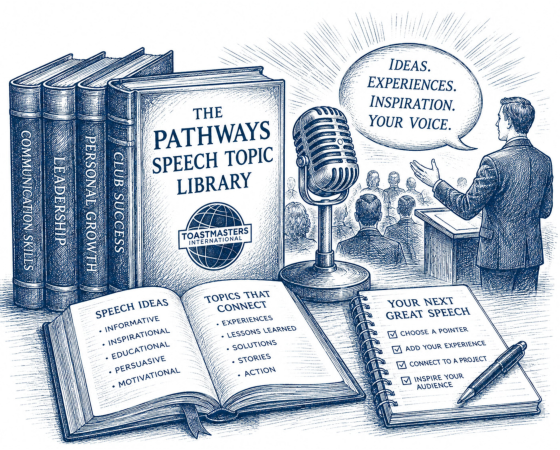
Instead of searching for a topic from scratch, members can choose a Pointer, add their own experience, connect it to a Pathways project, and create a speech that is useful, personal, and educational.
What’s New
Enhanced Pathways gives members many ways to grow through speeches, meeting roles, mentoring, leadership activities, and Education Series presentations.
That variety is valuable, but it can also leave members wondering what topic to choose next. Pathways Pointers can help solve that problem by turning practical Pathways guidance into ready-made speech ideas.
Helpful Tip
Before looking outside Toastmasters for a speech topic, browse the Pathways Pointer Index.
Choose one Pointer that interests you, helped you, confused you, or made you think. Then ask: What lesson does this topic teach? What personal experience can I add? What action do I want my audience to take?
Why Pathways Pointers Make Good Speech Topics
Pathways Pointers work well as speech topics because they are short, focused, practical, and connected to situations members actually experience.
- They answer real questions members ask.
- They explain Pathways in smaller pieces.
- They connect learning to club participation.
- They give members a clear point of view.
- They invite personal stories and examples.
A good speech does not have to begin with a dramatic event or a complicated idea. Sometimes it begins with a simple lesson that helped the speaker understand something more clearly.
Sample Speech Topic Ideas
| Pathways Pointer |
Why It Makes a Good Speech |
Pathways Projects That Fit |
Pointer #45
One Website Every Toastmaster Should Bookmark | Helps members find resources, solve problems, and become more independent in Pathways. | Researching and Presenting; Using Presentation Software; Connect with Your Audience |
Pointer #44
Don’t Wait for Perfect — Submit the Project | Perfectionism is a common barrier. This topic encourages members to take action and learn by doing. | Focus on the Positive; Inspire Your Audience; Reflect on Your Path |
Pointer #43
Your Mentor Cannot Read Your Mind | Every member can relate to needing help, asking better questions, and building a useful mentoring relationship. | Evaluation and Feedback; Connect with Your Audience; Building a Team |
Pointer #42
Base Camp Is Not Instant — What New Members Should Expect | New members need realistic expectations. This topic can reduce frustration and build confidence. | Ice Breaker; Develop a Communication Plan; Connect with Your Audience |
Pointer #41
Why Your Second Speech Matters More Than Your First | The second speech helps build momentum after the Ice Breaker and keeps members moving forward. | Evaluation and Feedback; Connect with Storytelling; Reflect on Your Path |
Pointer #40
Base Camp Is a Tool — Not a Test | This topic helps members reduce anxiety and focus on learning rather than fearing the system. | Understanding Your Communication Style; Inspire Your Audience; Researching and Presenting |
Pointer #39
Education Series: The Easiest Speeches You’re Not Using Yet | Members often need speech ideas. Education Series presentations offer useful topics already connected to club growth. | Prepare to Speak Professionally; Using Presentation Software; Public Relations Strategies |
Pointer #38
Pocket Guides: Pathways Help You Can Hold | Simple tools can make complicated information easier to use. This can become a demonstration or educational speech. | Researching and Presenting; Effective Body Language; Connect with Your Audience |
Pointer #37
From First Speech to Next Step | Helps members avoid the “now what?” gap after completing the first project. | Develop a Communication Plan; Connect with Storytelling; Reflect on Your Path |
Pointer #36
Don’t Forget the Meeting Role Requirements | Meeting roles are more than assignments. They are practice opportunities that support Pathways progress. | Understanding Your Leadership Style; Building a Team; Leading in Your Volunteer Organization |
Pointer #34
Making Mentors Part of Your Team, Not Just a Requirement | This topic shows how mentoring can become a partnership instead of a one-time assignment. | Building a Team; Motivate Others; Ethical Leadership |
Pointer #33
Club Climate Through Member Participation | Every member affects the club experience. This topic works well as a motivational or leadership speech. | Motivate Others; Building a Team; Public Relations Strategies |
Pointer #32
Turning Education Series Presentations into Wins | Shows how members can meet requirements while providing value to the club. | Manage Projects Successfully; High Performance Leadership; Public Relations Strategies |
Pointer #31
Making Meeting Roles Work for You | This topic shows how ordinary meeting roles develop confidence, leadership, listening, and organization skills. | Understanding Your Leadership Style; Leading in Difficult Situations; Lessons Learned |
Pointer #30
The Successful Club Series | Connects member learning with stronger club performance. | Leading in Your Volunteer Organization; Public Relations Strategies; High Performance Leadership |
Pointer #29
The Better Speaker Series | Offers practical lessons on becoming a stronger, clearer communicator. | Prepare to Speak Professionally; Connect with Your Audience; Inspire Your Audience |
Pointer #28
The Leadership Excellence Series | Shows that leadership is learned through practice, discussion, and service. | Building a Team; Motivate Others; Ethical Leadership |
Pointer #27
The Toastmaster Evaluation | Feedback is one of the most valuable parts of Toastmasters. This topic can teach members how to give and receive it well. | Evaluation and Feedback; Focus on the Positive; Connect with Your Audience |
Pointer #19
Pathways University | Uses a familiar comparison to make Pathways feel less overwhelming. | Connect with Storytelling; Researching and Presenting; Inspire Your Audience |
Pointer #18
Lead to Learn: Officer Roles Accelerate Your Pathways Growth | Officer roles and club service can accelerate growth when members see leadership as part of learning. | Leading in Your Volunteer Organization; High Performance Leadership; Lessons Learned |
Pointer #17
Your First Steps as a Toastmaster | Provides a simple roadmap for new members beginning their journey. | Ice Breaker; Evaluation and Feedback; Connect with Storytelling |
Pointer #16
Pathways Enrollment & Progress Checklist | A checklist can help members get started, stay organized, and avoid missing important requirements. | Develop a Communication Plan; Manage Projects Successfully; Reflect on Your Path |
How to Turn a Pointer into a Speech
Do not simply read the Pointer aloud. Use it as a starting point. The strongest speeches include your own experience, examples, and lessons learned.
- Choose one Pointer topic.
- Identify the main lesson.
- Add a personal story, club example, or leadership experience.
- Connect the lesson to a Pathways project objective.
- End with one action the audience can take.
For example, a member speaking from Pointer #43 — Your Mentor Cannot Read Your Mind might share a story about being confused, waiting too long to ask for help, and finally discovering that one honest question changed everything.
Another member might use Pointer #44 — Don’t Wait for Perfect to talk about the difference between preparing well and delaying progress because the speech never feels finished.
A Useful Tool for VPEs
This idea is not only helpful for members. It can also help Vice Presidents Education coach members who are stuck, uncertain, or waiting for inspiration.
When a member says, “I do not know what to speak about,” a VPE can point to the Pathways Pointer Index and say, “Choose one topic. Tell us why it matters. Add your own experience. Then match it to your next Pathways project.”
Bottom Line
Every Pathways Pointer is more than a short article.
It is a speech topic waiting to happen.
When members need ideas, they do not have to start from scratch. They can start with a Pointer, add their own voice, and deliver a speech that helps themselves, their club, and their audience.
In Pathways, the next speech topic may already be sitting in the Pointer Index.
|