


|
|||||
| High Performance Leadership | |||||
| Leadership can be defined as the ability to inspire and guide, build an environment where visions are developed, and support a team while goals are met. A leader who fills that definition, and does it in a way that motivates others to participate and contribute, is a high performance leader. | |||||
| In this project, you will build a team and lead its members to the successful completion of a project of your design. You will develop a comprehensive plan that includes a set of well-defined goals, delegate tasks to team members, and motivate each individual through the completion of his or her tasks until the project is complete. | |||||
| Purpose | |||||
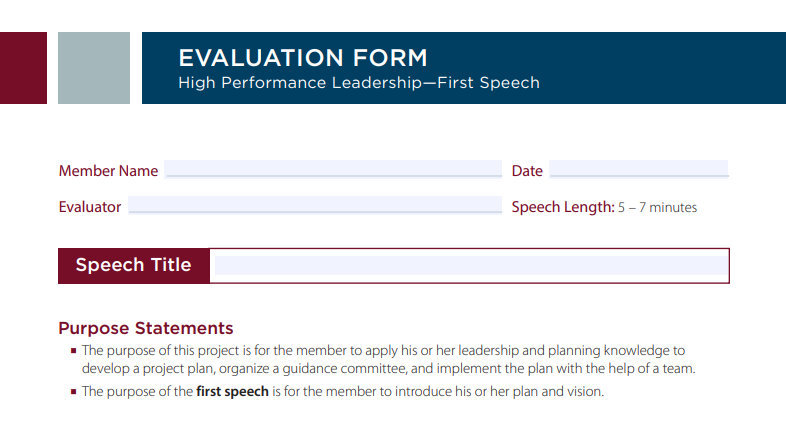
| The purpose of this project is to apply your leadership and planning knowledge to develop a project plan, organize a guidance committee, and implement your plan with the help of a team | |||||
| Overview | |||||
| Select a project to complete with a team of at least three other members. Form a guidance committee and meet at least five times through the duration of the project. Deliver a 5-to 7-minute speech at a club meeting to introduce your plan and vision. After you implement the plan, deliver a second 5- to 7-minute speech at a club meeting to share your experience developing and completing your plan. | |||||
High Performance Leadership (HPL) — What it is & how it worksPurpose. HPL is a real-world leadership project: you choose a meaningful initiative, build a team, form a Guidance Committee, plan the work, lead execution, and evaluate results with structured feedback. It’s action-learning—study → action → feedback. Where it fits in Pathways. Several paths culminate in a capstone leadership project; for example, Persuasive Influence specifies an HPL-style project you design and lead with a team and guidance committee. Core components
Typical deliverables (you can adapt to your club/district)
Good HPL project ideas
All of these have clear stakeholders, measurable outcomes, and real leadership stretch. Success tips (field-tested)
|
|||||
|
Web (HTML) checklist: hpl-checklist.html Printable PDF (Letter): HPL_Checklist_my-pathways.pdf |
|||||
| View the complete form HERE | |||||
 |
|||||
| View the complete form HERE | |||||
|