
|
Pathways Pointer Number 64, September 15. 2026 |
|
We often think of Pathways in terms of speeches, projects, levels, and paths. |
||||||||||||||||||||||
|
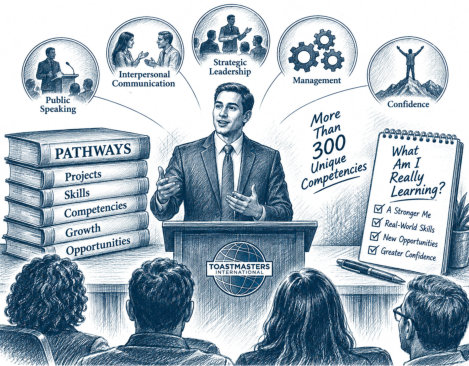
But underneath all of those projects is something much more important: competencies — the actual skills we are developing. |
||||||||||||||||||||||
It Starts With Five Core CompetenciesThe Toastmasters Pathways learning experience was developed around five core competencies identified by the Toastmasters International Board of Directors. |
||||||||||||||||||||||
|
||||||||||||||||||||||
But Five Is Only the BeginningToastmasters tells us that the Pathways learning experience provides opportunities to build more than 300 unique competencies. |
||||||||||||||||||||||
|
Don't let the number 300 overwhelm you. You don't need to memorize a list of competencies. The important question is what those competencies mean to your development. |
||||||||||||||||||||||
Look Beyond the SpeechWhen you complete a Pathways project, don't think only about the speech you have to give. |
||||||||||||||||||||||
|
Ask yourself: |
||||||||||||||||||||||
|
A project may be helping you organize ideas, communicate more effectively, listen actively, persuade an audience, resolve conflict, mentor another person, build a team, manage a project, develop confidence, or lead others. |
||||||||||||||||||||||
COMPETENCY SPOTLIGHTPathways develops skills you may not realize you are practicing.
|
||||||||||||||||||||||
A Different Way to Think About PathwaysWhen we look at Pathways through the lens of competencies, completing a project takes on a different meaning. |
||||||||||||||||||||||
|
You aren't simply giving another speech. You are practicing communication, interpersonal, leadership, management, and confidence-building skills that can be used in your club, workplace, community, volunteer activities, and everyday life. |
||||||||||||||||||||||
Your Path Doesn't Limit Your LearningYour selected Path gives your learning a particular direction, but it does not put you in a box. |
||||||||||||||||||||||
|
Elective projects give members flexibility to extend their learning. By choosing electives thoughtfully, members can develop skills across all five core competency areas. |
||||||||||||||||||||||
Choose Electives With a PurposeDon't choose an elective simply because it looks easy or because you need another project to finish a level. |
||||||||||||||||||||||
|
Instead, ask: |
||||||||||||||||||||||
|
Then look for a project that gives you an opportunity to practice that skill. |
||||||||||||||||||||||
Before Your Next ProjectBefore you begin preparing your next speech, take a few minutes to look at the project from a different perspective.
|
||||||||||||||||||||||
Bottom LineThe real value of Pathways isn't simply the number of projects you complete or even the number of Paths you finish. |
||||||||||||||||||||||
|
It's what you can do better because you completed them. |
||||||||||||||||||||||
|
A completed project is a milestone.
A competency you can use is the real accomplishment. |
||||||||||||||||||||||
|
So the next time you open a Pathways project, don't just ask: |
||||||||||||||||||||||
| “What speech do I have to give?” | ||||||||||||||||||||||
| Ask: “What am I going to learn to do better?” | ||||||||||||||||||||||
RESOURCESExplore the competencies behind your Pathways projects and use them to make more purposeful choices about your learning. |
||||||||||||||||||||||
|
Pathways Pointers Home Page