
|
Pathways Pointer Number 49, July 29, 2026 |
|
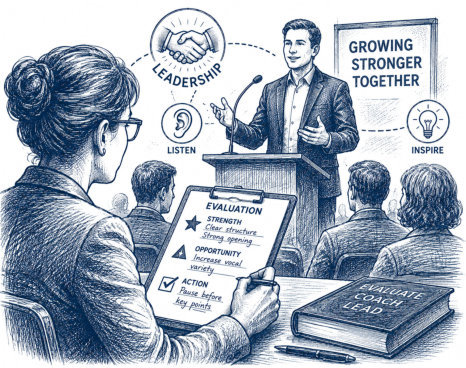
Evaluations are much more than feedback. They are one of the most effective ways to develop communication, coaching, and leadership skills. |
||||||||||||||
|
Many members think evaluations exist only to help the speaker improve. Although helping the speaker is an important purpose, every evaluation also helps the evaluator develop valuable skills. |
||||||||||||||
|
When you listen carefully, observe a presentation, organize your thoughts, communicate recommendations, and encourage another member, you are practicing leadership. |
||||||||||||||
What's New?The enhanced Pathways experience places greater emphasis on leadership development alongside communication development. |
||||||||||||||
|
Every evaluation provides an opportunity to practice observation, active listening, critical thinking, organization, empathy, coaching, and leadership. These skills can be used in Toastmasters meetings, the workplace, volunteer organizations, and everyday conversations. |
||||||||||||||
The Leadership ConnectionGreat leaders observe before they advise. They recognize strengths, identify opportunities, and encourage people to continue growing. |
||||||||||||||
|
Every time you deliver an evaluation, you are practicing these same leadership behaviors. You are not simply reviewing a speech—you are helping another person move closer to achieving a goal. |
||||||||||||||
Helpful TipTreat every evaluation as though you are coaching a future champion. Your goal is not to point out every possible weakness. Your goal is to help the speaker take one meaningful step forward. |
||||||||||||||
Use This Simple Evaluation Formula
|
||||||||||||||
Make Your Recommendations SpecificA general comment such as “Use more vocal variety” may be accurate, but it does not tell the speaker exactly what to do. |
||||||||||||||
|
Try this instead: “During the most important sentence in your conclusion, slow down, pause before the final phrase, and lower your voice slightly. This will help the audience recognize and remember your main message.” |
||||||||||||||
|
Specific feedback gives the speaker a practical tool instead of a general observation. It also demonstrates thoughtful listening and effective coaching. |
||||||||||||||
What Great Evaluators Do
|
||||||||||||||
Leadership Skills Developed Through Evaluations
|
||||||||||||||
Your Leadership ChallengeAt your next meeting, focus on delivering feedback that is positive, purposeful, and practical.
|
||||||||||||||
QUICK REMINDER
|
||||||||||||||
Bottom LineEvery evaluation is an opportunity to strengthen two members: the speaker receiving the feedback and the evaluator learning to deliver it. |
||||||||||||||
|
Great evaluators do more than describe what they heard. They help speakers recognize their potential and take the next step toward achieving it. |
||||||||||||||
|
“Great speakers inspire audiences. Great
evaluators inspire speakers. Great leaders do
both.”
|
||||||||||||||
RESOURCESUse these resources to prepare effective evaluations, understand meeting roles, and continue developing your communication and leadership skills. |
||||||||||||||
|
Pathways Pointers Home Page