|
|||
|
|||
| PATHWAYS POINTERS OVERVIEW | |||
|
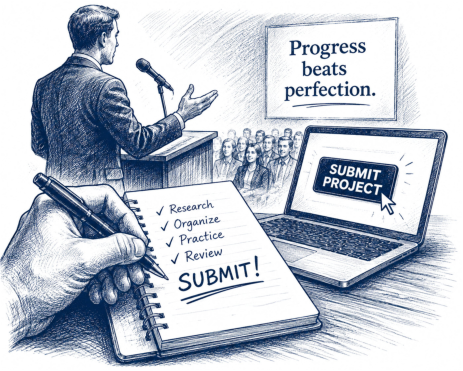
Don't Wait for Perfect — Submit the Project Many members delay completing a Pathways project because they want it to be perfect. They revise their speech one more time, tweak their slides, or wait for the “right” opportunity to present. But Pathways is about learning and growing, not creating a flawless speech. Complete the project, learn from the experience, and move on to the next challenge. What’s New One of the biggest obstacles to progress in Pathways is not the project itself. It is waiting until everything feels perfect. Every project teaches a skill. Every speech provides practice. Every evaluation gives you something useful to apply next time. Helpful Tip If you have met the project objectives and are reasonably prepared, go for it. The feedback you receive after delivering the project is often more valuable than extra time spent trying to make it perfect. Remember: Progress beats perfection. Why Members Wait Members often delay a project for good reasons. They want to do well. They want to represent themselves clearly. They want their speech, presentation, or assignment to feel complete. Those are good intentions, but too much delay can stop momentum. Pathways projects are not meant to be final exams. They are learning experiences. The purpose is to practice, receive feedback, and improve one step at a time. Progress Creates Momentum The members who make steady progress in Pathways are not always the most polished speakers. They are the members who complete projects, learn from feedback, and keep moving forward. Each completed project creates momentum. Each evaluation gives you something to use. Each next step becomes easier because you are already moving. What Happens When You Delay Waiting for perfect can quietly turn into waiting too long.
A completed project earns credit. An unfinished perfect project does not. A Simple Success Strategy Before delaying a project, ask yourself a few simple questions:
If the answer is yes, schedule the project and take the next step. Club Leader Ideas Club leaders can help members move forward by making project completion feel manageable.
Sometimes a little encouragement is all a member needs to stop polishing and start presenting. Bottom Line Don’t let the pursuit of perfection prevent your progress. Submit the project, receive the feedback, and take the next step in your Pathways journey. Sometimes the best way to improve is simply to complete the project and move forward. In Pathways, progress beats perfection. |
|||
|
RESOURCES |
|||
|
Toastmasters International Pathways Review the project objectives before preparing your speech. Ask your evaluator to focus on one or two areas for improvement. Meet with your mentor if you need help moving forward.
|
|||