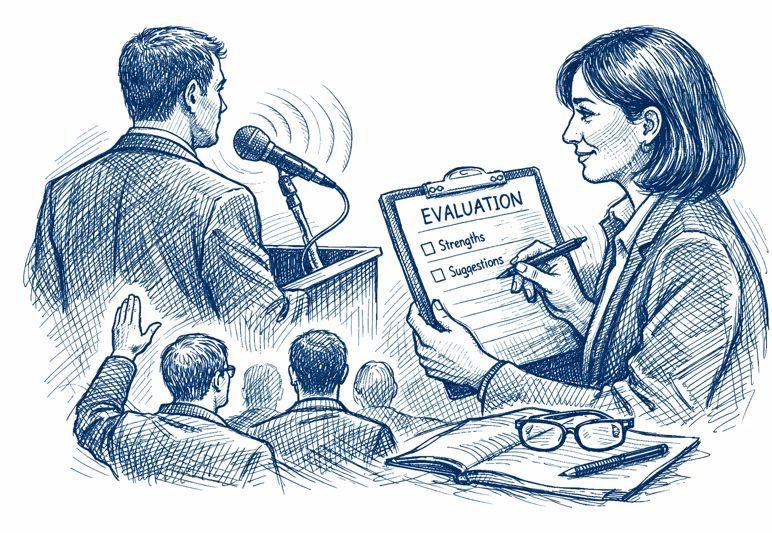
Evaluations are the heartbeat of Toastmasters. Every speech, leadership role, and meeting assignment
comes with feedback designed to help members improve with encouragement and clarity.
The goal is not criticism — it is guided growth.
Identifying what worked well
Offering specific suggestions for improvement
Building confidence and motivation
Tracking progress over time
Great evaluations balance encouragement and direction — helping members leave the meeting
knowing exactly what to keep, what to adjust, and what to try next.
Why Evaluations Matter
Members improve faster and stay engaged
Meetings maintain high speaking quality
New members feel supported
Experienced members continue to grow
Bottom Line
Toastmasters evaluations transform good speakers into great ones.
When feedback is clear, kind, and focused, everyone in the club improves together.
Finding Evaluation Forms
You can find all Toastmasters Pathways
evaluation forms directly within Basecamp on the Toastmasters
International website (toastmasters.org) by logging in and
navigating to your profile, or by looking in the Toastmasters
Resource Library under specific project pages. The best method for
finding forms for your specific project is through Basecamp,
either via the main Speech Evaluations button or within each
project's content.
Finding Forms in Basecamp (Recommended Method):
Log in:Go
to the Toastmasters International website and log in.
Access Basecamp:Click on "Basecamp"
from your profile.
Speech Evaluations:Look for the "Speech
Evaluations" button (one of the five main buttons).
Launch PDF:In the Evaluation Resources
section, find your project and click the link to "Launch" the
PDF evaluation form, which you can print or download.
Within Projects:You can also find forms
within each specific project's lesson page after you've
started it.
Other Ways to Find Forms:
Toastmasters Resource Library:Toastmasters
International offers downloadable forms for many projects
(like the Generic Evaluation, Ice Breaker, etc.).
District/Club Websites:Many local
Toastmasters districts and clubs provide direct links to
downloadable evaluation PDFs on their websites
How to Use Them:
Download: Get the PDF
from Basecamp or a club site.
Complete: Fill it out
on your device or print and complete by hand.
Upload: Return the
completed form in Basecamp under your documents to show
project completion.
The CRCS Method
The CRCS method is a structured
feedback technique used in Toastmasters to deliver effective
and balanced verbal speech evaluations. It is often referred
to as the "feedback sandwich" or "sandwich method".
The acronym stands for:
C – Commend:Start
by highlighting what the speaker did well.
R – Recommend:Offer specific,
constructive suggestions for improvement.
C – Commend:Conclude with additional
positive feedback, highlighting what they did exceptionally
well.
S – Summary:Provide a brief recap of
your main points to help the speaker remember the key
takeaways.
Why It Is Used
Encourages Growth:By
starting and ending with praise, it makes the speaker more
receptive to constructive criticism.
Maintains Motivation:The final
commendation ensures the speaker feels motivated to continue
developing their skills rather than feeling discouraged by the
recommendations.
Structured Feedback:It provides a clear
roadmap for the evaluator to follow within the standard 2- to
3-minute time limit for verbal evaluations.
The Sandwich Method (Hamburger
Method)
Toastmasters evaluation methods center on
the Sandwich Method (positive-constructive-positive), focusing on
the speaker's goals and using the Pathways criteria, emphasizing
specific examples, and balancing encouragement with actionable
feedback to foster growth, not just praise. Key steps involve
pre-speech prep (asking speaker goals), attentive listening with
notes (using +/-), structuring feedback using the sandwich
technique, and focusing on what was said and done (not who they
are).
Top Bun (Positive):
Start with 1-2 specific strengths or things the speaker did
well (e.g., powerful opening, clear voice).
The "Meat" (Constructive):
Offer 1-2 focused areas for improvement, explaining how to
improve and giving examples, linking to Pathways objectives if
applicable.
Bottom Bun (Positive
Reinforcement): End with another positive comment or
encouragement to build confidence.